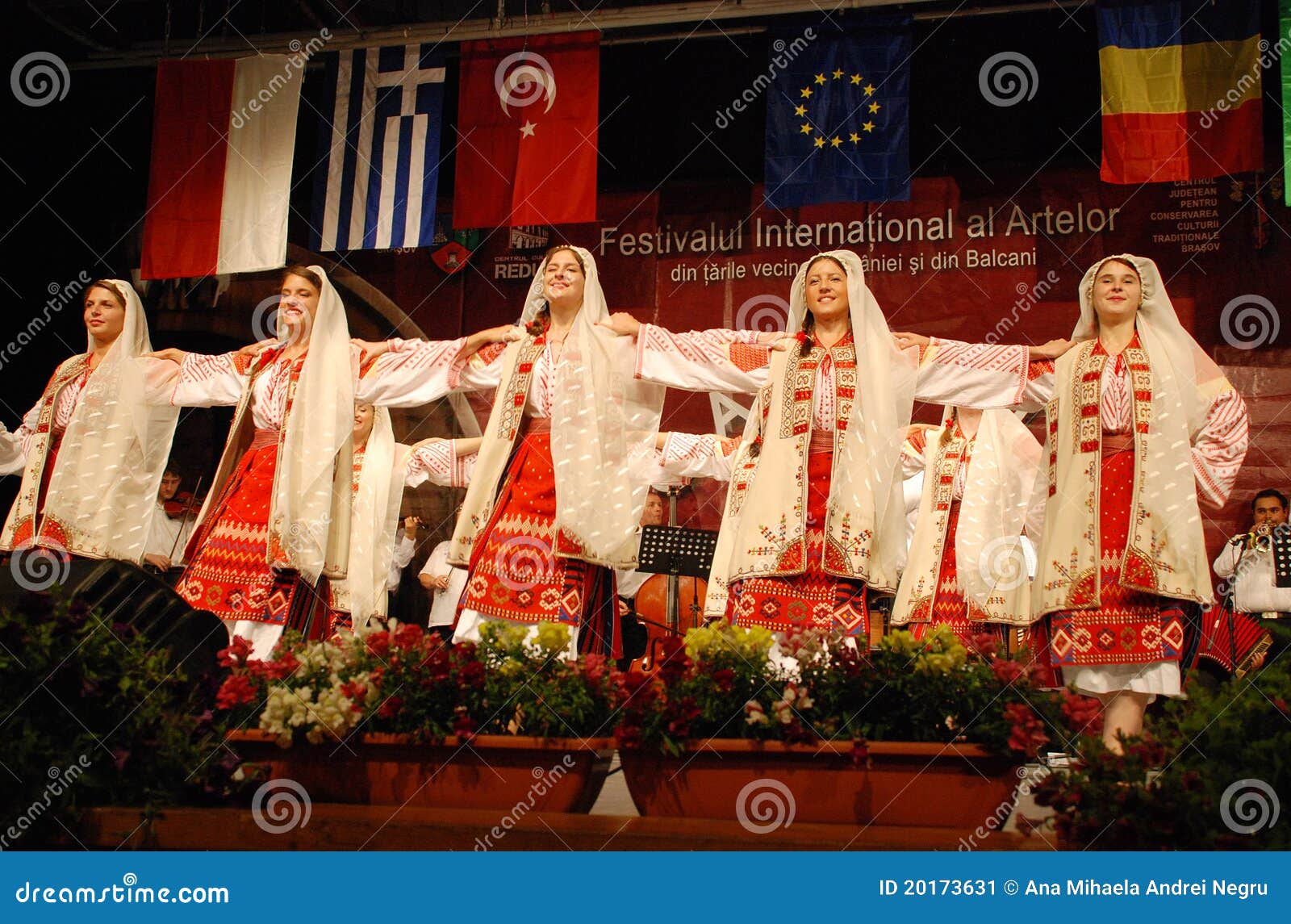
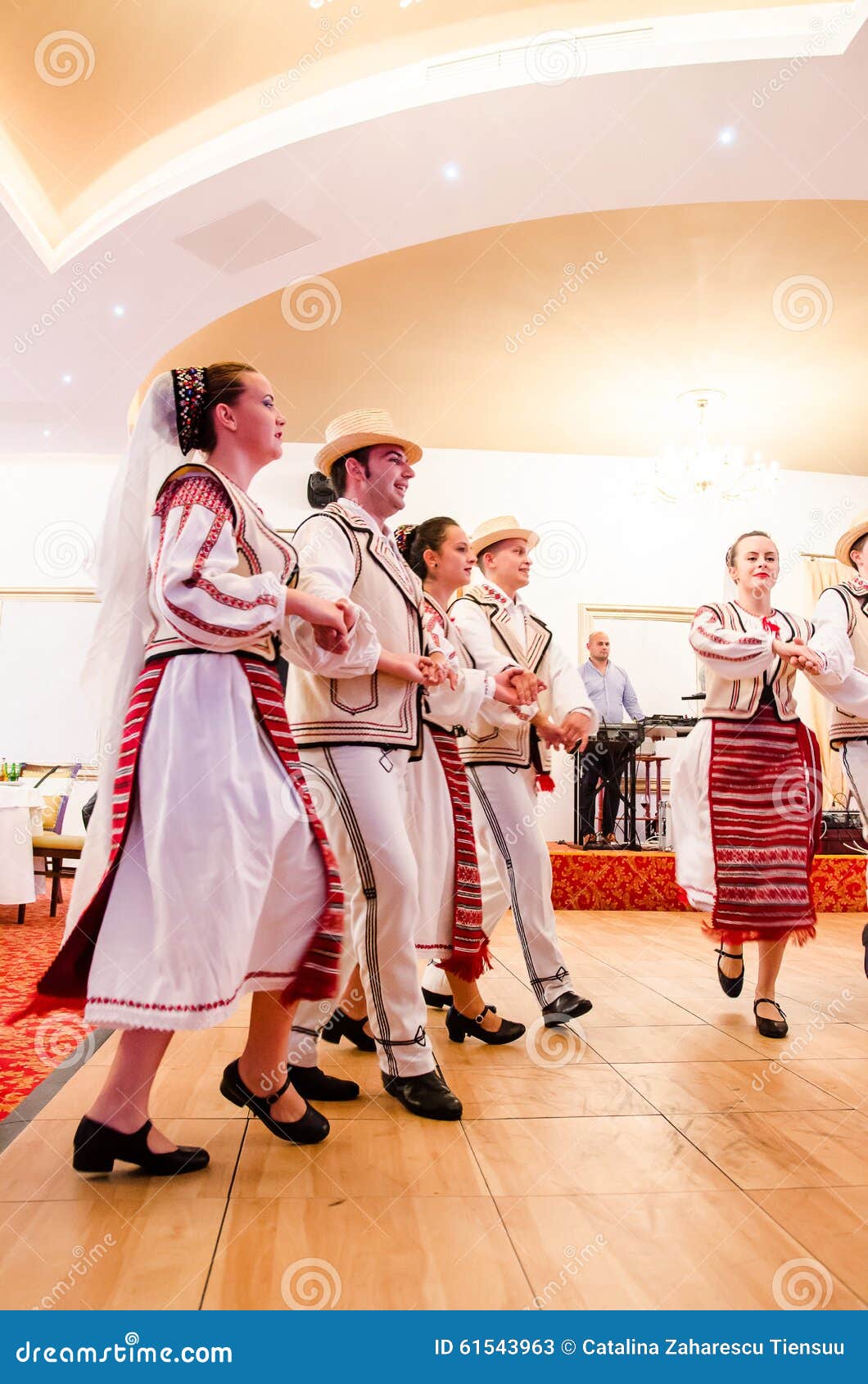
Romanian Folk Dances (Romanian: Dansuri populare românești, pronounced [ˈdansurʲ popuˈlare romɨˈneʃtʲ]), (Hungarian: Román népi táncok, pronounced [ˈromaːn ˈneːpi ˈtaːnt͡sok]), Sz. 56, BB 68 is a suite of six short piano pieces composed by Béla Bartók in 1915. He later orchestrated it for small ensemble in 1917 as Sz. 68, BB 76.
It is based on seven Romanian tunes from Transylvania, originally played on fiddle or shepherd's flute. Its title was originally Romanian Folk Dances from Hungary (Hungarian: Magyarországi román népi táncok, pronounced [ˈmɒɟɒrorsaːɡi ˈromaːn ˈneːpi ˈtaːnt͡sok]) but was later changed by Bartók when Transylvania became part of Romania in 1920. It is nowadays available in the 1971 edition which is written with key signatures although Bartók rarely used key signatures.
Structure
This set of dances consists of six movements and, according to the composer, it should take four minutes and three seconds to perform, but most professional pianists take up to five minutes. The list of the movements is as follows (with the original Hungarian title listed first, the most commonly known Romanian title second, and the English translation in parentheses):
Analysis
Arrangements
Aside from the version Bartók wrote for a small orchestral ensemble, some of Bartók's friends wrote adaptations or transcriptions of this piece for several different ensembles. The following are the best-known:
- Arthur Willner's version for string orchestra. It is a mere transcription with no modification of the original music.
- Zoltán Székely's version for violin and piano. This is not just a transcription, but also an arrangement and adaptation of the piece for these two instruments. Some of the modifications Székely made included transposing some of the movements (the second movement was transposed from D minor to F♯ minor, the third from B minor to D minor and the fourth from A major to C major), repeating some sections, adding bars, and using several techniques for the violin such as artificial harmonics, double stops, and Sautillé.
Notable recordings
Notable recordings of this composition include the following:
Notable recordings of the arrangement by Zoltán Székely include the following:
See also
- Two Romanian Folk Dances
- Culture of Romania
- Béla Bartók
- List of compositions by Béla Bartók
- Transylvania
References
Further reading
- Hinson, Maurice (December 1991). Romanian Folk Dances, Sz. 56, for the piano (Alfred Masterwork ed.). Alfred Publishing. ISBN 978-0-88284-864-8.
- Kroo, Gyorgy (1974). Guide to Bartok. Branden Publishing Co. ISBN 978-0-8283-1559-3.
- Suchoff, Benjamin (1993). Béla Bartók essays. Lincoln: University of Nebraska Press. ISBN 978-0-8032-6108-2.
- Antokoletz, Elliott; Fischer, Victoria; Suchoff, Benjamin (2000). Bartók perspectives: man, composer, and ethnomusicologist. Oxford: Oxford University Press. ISBN 978-0-19-512562-7.
- Yeomans, David (1988). Bartók for piano. Bloomington: Indiana University Press. ISBN 978-0-253-21383-9.
External links
- Romanian Folk Dances, Sz. 56: Scores at the International Music Score Library Project
- Romanian Folk Dances, Sz. 68: Scores at the International Music Score Library Project